

Science and History
Operation Argus: Did Nuclear Tests Create a Radiation Belt?
The 1958 experiment tested a striking idea about Earth’s magnetic field. Creating trapped radiation and building a useful defence shield were different questions.
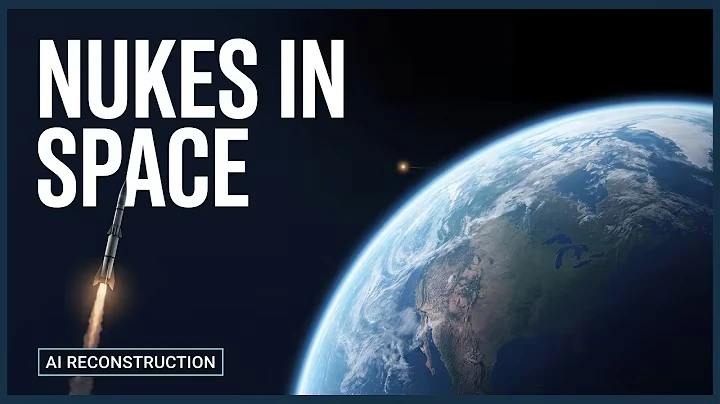
In 1958, the United States tested whether nuclear explosions high above Earth could leave charged particles trapped by the planet’s magnetic field. The idea sounded like science fiction: use an artificial radiation belt to interfere with communications or weapons. Operation Argus made it an experiment.
At a Glance
- Argus comprised three high-altitude tests over the South Atlantic in 1958.
- The experiments produced measurable trapped electrons.
- Demonstrating an effect was not the same as building an effective missile shield.
The Idea Behind the Tests
Lawrence Livermore physicist Nicholas Christofilos proposed that a sufficiently high nuclear explosion could produce an artificial population of trapped charged particles. Earth already had natural radiation belts, discovered through early satellite measurements. Argus investigated whether people could create a related effect deliberately. [1]
Think of the distinction between releasing particles and keeping them around. An explosion can inject material into the surrounding environment; a persistent radiation belt also depends on particle energies, magnetic geometry and loss processes. The useful question was what remained after the initial event, where it travelled and what could measure it.
How the Experiment Was Observed
Rockets launched from USS Norton Sound carried the devices. The test programme combined measurements from satellites, sounding rockets and surface stations. Explorer IV helped establish background conditions and recorded the effects of the tests. Multiple observing systems mattered: a prediction becomes more convincing when independent measurements can examine the same physical effect. [1]
The Defense Threat Reduction Agency’s summary identifies the operation as three low-yield, high-altitude shots. Its account says the experiments demonstrated the predicted electron shell. The result was a physical measurement, rather than simply an eyewitness impression of the explosions. [2]
Did It Work?
That depends on the question. As a test of whether a nuclear detonation could create trapped radiation, Argus produced supporting observations. As a route to a dependable protective shield, the conclusion was much less useful. The Department of Energy’s historical account says Earth’s magnetic field could not maintain the proposed long-lasting shield. [3]
A visible result can therefore be a scientific success and a disappointing engineering solution at the same time. To call something a defence system, researchers would need to establish much more than its existence: reliability, controllability, duration and the consequences for friendly systems would all matter. A proof of principle cannot answer every operational question.
Keep Argus Separate from Later Tests
High-altitude nuclear testing did not end with this operation. NASA’s review describes artificial belts from Cold War tests with different persistence, including some lasting much longer than others. It is a mistake to transfer every effect of a later, different test to Argus. Names, dates, yields and measurement conditions matter when comparing dramatic historical accounts. [4]
What Makes the Story Worth Revisiting?
Argus sits where basic physics, military ambition and early space science meet. Its most useful lesson is methodological: separate the proposed mechanism, the observed result and the wider claim. That approach also helps when reading modern stories about unusual technology. Ask what was predicted, what was actually measured and how far the conclusion extends.
Watch the Verified Insights Video
Sources and Further Reading
- Lawrence Livermore National Laboratory — Operation Argus
- DTRA — Operation Argus fact sheet (PDF)
- US Department of Energy — Nuclear testing history (PDF)
- NASA — Space Weather Events Linked to Human Activity
Sources checked 13 November 2026. Article by Verified Insights / Strike Labs.