

Aviation and Engineering
How Air Crash Investigators Piece Together What Happened
From crash-scene mapping and black boxes to laboratory tests: how investigators reconstruct aircraft accidents, with a directory of major investigation authorities.
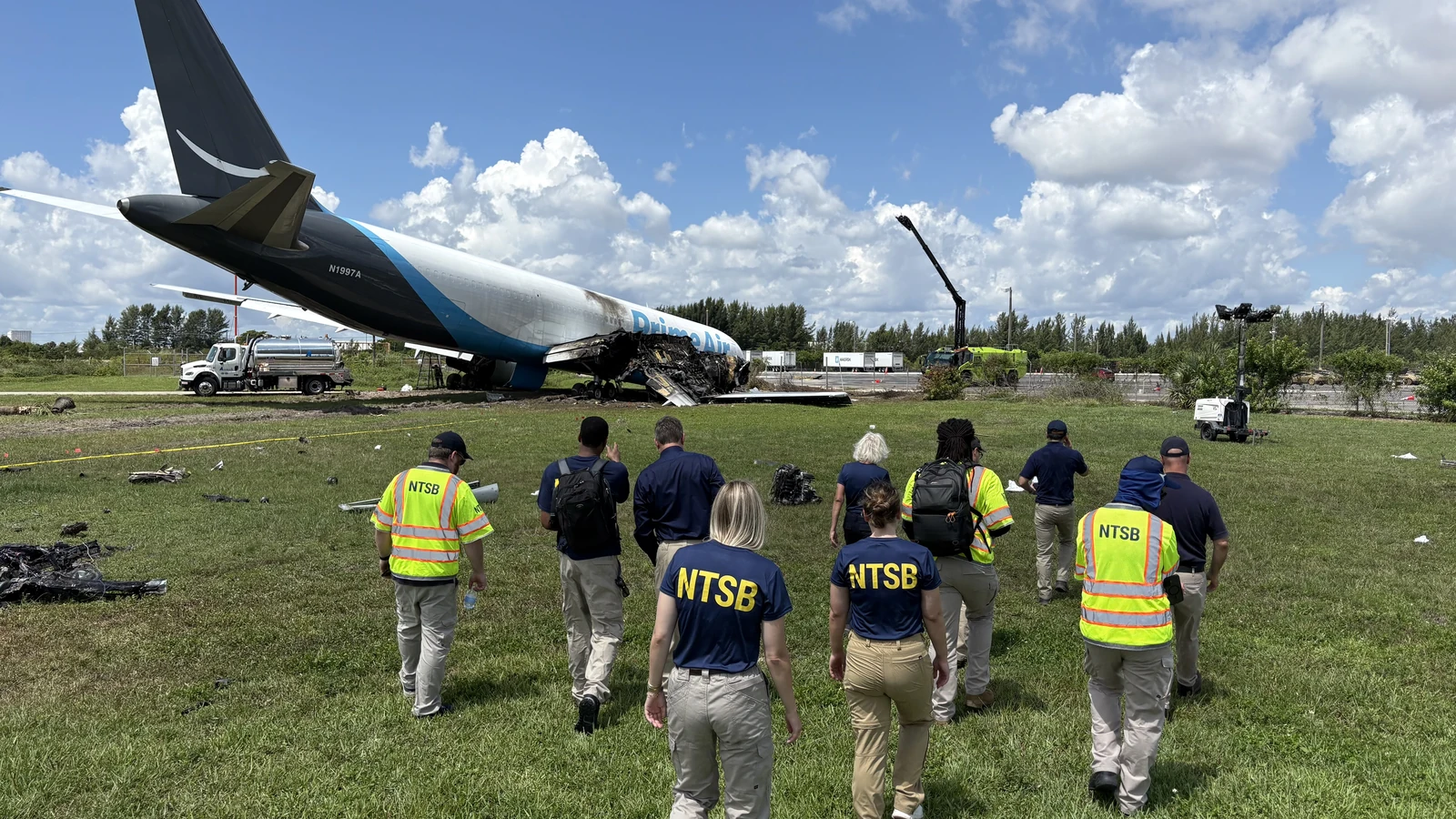
A broken aircraft can scatter evidence across a runway, hillside or stretch of ocean. Some clues are physical: an impact mark, a damaged component, the position of a fragment. Others survive elsewhere, in a maintenance record, a radio transmission or a flight-data trace. An investigation has to bring those records together into an explanation that fits the evidence.
This article continues our black-box flight-recorder guide. The recorders are one part of a much wider investigation, involving engineers, pilots, recorded-data specialists and human-factors investigators.
At a Glance
- Investigators document the scene, recover evidence and reconstruct the sequence of events.
- Physical damage, recorded data and operational records must be considered together.
- A safety investigation aims to prevent a recurrence; police and judicial investigations have different responsibilities.
- The country where an accident occurs normally leads the international safety investigation.
Preserving the Scene Before It Changes
Rescue and immediate safety come first. Once access is possible, investigators document what remains before recovery work, weather or movement changes it. Ground marks, the distribution of wreckage, fuel samples and witness recollections can all matter. The UK Air Accidents Investigation Branch describes this early work in its field-investigation overview.
Scene mapping records where evidence was found, not just what it looks like after collection. A photograph of a recovered part answers a different question from a survey showing its original location. Together, those records help preserve the relationship between the aircraft, its fragments and the surrounding ground.
Building a Timeline from Different Sources
The Australian Transport Safety Bureau’s investigation methodology includes site observations, recorder downloads, interviews, operational records, weather analysis and tests. Investigators compare evidence from different sources, reconstruct events and examine explanations that support or contradict a proposed sequence.
Our black-box article explains the distinction between cockpit sound and flight measurements. Investigators also seek radar and air-traffic-control recordings. In smaller aircraft, electronic devices such as GPS units, tablets or phones may retain useful information. A recorder download helps establish what was recorded; interpreting why it happened requires the other evidence.
Taking the Aircraft into the Laboratory
The investigation continues after the wreckage leaves the scene. The AAIB describes laying out recovered material for detailed examination, testing components and using metallurgy, simulation or specialist flight work where appropriate. Damaged recording equipment can require careful cleaning, drying or repairs before its memory can be read.
A useful way to understand this work is to distinguish damage caused during an accident from a defect that contributed to it. A broken component cannot answer that question by appearance alone. Its examination must be considered alongside the aircraft’s behaviour and other findings. The conclusion needs a supported sequence, rather than a dramatic photograph.
Looking Beyond a Single Action
Investigators examine the operation as well as the machine. Training, work and rest patterns, workload, communications, maintenance and organisational procedures may be relevant. The ATSB includes these human-performance and operational records in its evidence collection. The goal is to understand the circumstances in which decisions were made and systems were used.
The process is not a straight line. As the US National Transportation Safety Board explains, analysis can uncover a need for more records or information from a manufacturer. A promising theory may have to change as new evidence arrives.
Who Leads When Several Countries Are Involved?
An airliner may be registered in one country, operated from another and built using equipment from several more. Under the international framework described by ICAO, the country where the accident occurs normally institutes the investigation. It can delegate work or seek technical help.
The aircraft’s states of registration, operator, design and manufacture have participation rights. A country whose citizens were killed or seriously injured can also have a defined role. ICAO sets the international framework; it does not routinely take over national accident investigations.
The Main Investigation Authorities
This directory covers major aviation countries and authorities of particular interest to Australian readers. It lists the principal civil aviation safety-investigation bodies or arrangements, rather than every police, military or judicial organisation that might be involved. Names and links were checked against ICAO’s directory and the Singapore Ministry of Transport’s international list.
| Country | Principal Body | Abbreviation |
|---|---|---|
| Australia | Australian Transport Safety Bureau | ATSB |
| New Zealand | Transport Accident Investigation Commission | TAIC |
| United States | National Transportation Safety Board | NTSB |
| Canada | Transportation Safety Board of Canada | TSB |
| United Kingdom | Air Accidents Investigation Branch | AAIB |
| France | Bureau d’Enquêtes et d’Analyses pour la sécurité de l’aviation civile | BEA |
| Germany | Federal Bureau of Aircraft Accident Investigation | BFU |
| India | Aircraft Accident Investigation Bureau | AAIB |
| China | Civil Aviation Administration of China, through its accident-investigation arrangements | CAAC |
| Japan | Japan Transport Safety Board | JTSB |
| Indonesia | National Transportation Safety Committee | KNKT / NTSC |
| Singapore | Transport Safety Investigation Bureau | TSIB |
| South Korea | Aviation and Railway Accident Investigation Board | ARAIB |
| Brazil | Aeronautical Accidents Investigation and Prevention Center | CENIPA |
Arrangements differ between countries, and responsibility can be delegated. Use the official report for the particular occurrence to identify who led it and which organisations participated.
From Findings to Safer Flights
The NTSB describes a process that ends with an adopted report and advocacy for safety recommendations. Those recommendations can address manufacturers, regulators, operators and other organisations. Its safety role is separate from investigating criminal activity, which belongs to law-enforcement authorities.
Early reporting deserves careful reading. The ATSB explains that a preliminary report records initially established facts and areas still being investigated. It should not be treated as a final finding of cause. Evidence may be incomplete, contradictory or unavailable, and some questions can remain unresolved.
For readers following an accident, the strongest account is the one that shows how its conclusions follow from the evidence. The lasting value of that work is what the next crew, engineer or operator can learn from it.
Sources and Further Reading
- ATSB — Investigation Phases
- UK AAIB — How We Investigate
- NTSB — The Investigative Process
- ICAO — Participation in Accident Investigations
- ICAO — Investigation Authority Links
- Singapore Ministry of Transport — International Investigation Authorities
- ATSB — About Investigation Reports
References checked 13 November 2026. Original article by Verified Insights / Strike Labs. Company announcements are identified separately from published research; historical examples and photographs are dated.